
Novogene Korea
  • Novogene Korea
  • Genomics
    • Human Whole Genome Sequencing
    • Plant & Animal Whole Genome Sequencing
    • Microbial Whole Genome Sequencing
    • Whole Exome Sequencing
    • Plant & Animal De novo Sequencing
    • Microbial De novo Sequencing
    • Amplicon Sequencing
    • Shotgun Metagenomics Sequencing
    Transcriptomics
    • mRNA Sequencing
    • Total RNA Sequencing
    • Full-Length Transcriptome Sequencing
    • Whole Transcriptome Sequencing
    • Small RNA Sequencing
    • Circular RNA Sequencing
    • Metatranscriptome Sequencing
    • Prokaryotic RNA Sequencing
    Single Cell & Spatial Omics
    • Single Cell Gene Expression
    • Single Cell Immune Profiling Sequencing
    • Single Cell Long Read Transcriptome
    • Visium HD Spatial Gene Expression
    • Stereo-Seq Spatial Gene Expression
    • Xenium In Situ Spatial Transcriptome
    Epigenomics
    • Whole Genome Bisulfite Sequencing (WGBS)
    • Directed DNA Methylation Sequencing (DM-Seq) NEW
    • Reduced Representation Bisulfite Sequencing (RRBS)
    • Chromatin Immunoprecipitation Sequencing (ChIP-seq)
    • RNA Immunoprecipitation Sequencing (RIP-seq)
    • Assay for Transposase-Accessible Chromatin with Sequencing (ATAC-seq)

    Premade Library

    • Sequencing Only (Illumina 플랫폼)
    • Sequencing Only (PacBio 플랫폼)
    Proteomics & Metabolomics
    • Olink Proteomics
    • Quantitative Proteomics (MS)
    • Untargeted Metabolomics (MS)
  • 프로모션프로모션
    • 플랫폼
    • 자동화 운송 플랫폼 (Falcon)
    • BI 분석툴 (NovoMagic)
    • Customer Service System (CSS)
    • 브로셔
    • 케이스 스터디
    • 웨비나
    • 블로그
    • 샘플준비 가이드라인
    • 커뮤니티
    • 암 연구
    • 면역 종양학
    • 농업
    • 환경
    • 식품
    • 인간 마이크로바이옴
    • 동물 & 식물 마이크로바이옴
    • 신약개발
    • 희귀 질환 연구
    • 회사소개
    • 글로벌 입지
    • 뉴스룸
    • 채용 정보
  • 문의하기문의하기
  1. Home
  2. Resources
  3. Blog
  4. Using NGS technologies to understand methanogenic hydrocarbon degradation by an archaeal species

Using NGS technologies to understand methanogenic hydrocarbon degradation by an archaeal species

Introduction

The use of NGS technologies has revealed that in addition to their methogenic activity, the archaeal species Candidatus Methanoliparum can also break down hydrocarbons. This exciting discovery could have several important applications for recovering energy from subsurface oil reservoirs. The study is a collaborative effort led by Lei Cheng from the Institute of Biogas Science of the Ministry of Agriculture and Rural Affairs, Professor Li Meng of Shenzen University, and Professor Gunter Wegener of the Max Planck Institute of Marine Microbiology. These exciting findings were made possible by using NGS technology provided by Novogene.
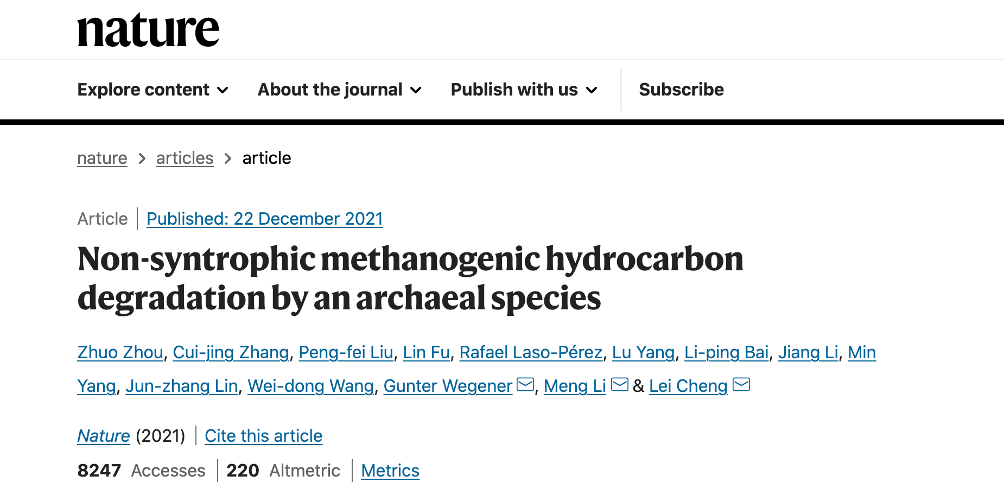
Using NGS technologies, the researchers uncovered previously unknown facts about Candidatus Methanoliparum (Ca. Methanoliparum), a prokaryote that belongs to the domain Archea. These microorganisms are methanogens, which means that they produce methane as a metabolic byproduct under hypoxic conditions. The methanogenic degradation of hydrocarbons found in oil is usually carried out by hydrocarbon-degrading bacteria in partnership with methogenic archea, with both parties reaping the benefit. However, this study’s use of sequencing technologies has helped shed light on how these methanogens can work in isolation to degrade the hydrocarbons found in oil and what mechanims they use that set them aside from other methanogens. This research revealed that Ca. Methanoliparum contains and overexpresses genes that encode alkyl-coenzyme M reductases and methyl-coenzyme M reductases, genes involved in archeal multicarbon alkane and methane metabolism, demonstrating the critical role that Ca. Methanoliparum plays in oil hydrocarbon degradation.

Experimental Design

To understand the role these microrganisms have in oil hydrocarbon degradation, Ca. Methanoliparum was cultured from a subsurface oil reservoir, and samples were supplemented with the hydrocarbon hexadecane before sequencing was carried out to look at the functioning genes. The results from the 16S RNA amplicon sequencing data demonstrate that Ca. Methanoliparum made up 75% of archaea found in hexadecane-degrading cultures. The high presence of Ca. Methanoliparum in the samples was confirmed by metagenomic sequencing, which showed that Ca. Methanoliparum accounted for approximately 30-40% of the microbial community in these cultures.

Once it was established that these cultures contained high numbers of Ca. Methanoliparum, metatranscriptomics was performed to quantify gene expression to assess what genes were functional and if they were related to methanogenic hexadecane degradation. The data demonstrated that Ca. Methanoliparum has a high number of transcripts related to genes involved in the methanogenic hexadecane degradation pathway. Genes encoding this pathway ranked among the top 10 – 25% of all genes transcribed by these archea. More specifically, Ca. Methanoliparum was shown to overexpress genes that encode both alkyl-coenzyme M reductases and methyl-coenzyme M reductases which are genes involved in multi-carbon and methan metabolism. This exciting finding demonstrates that Ca. Methanoliparum performs both the degradation of hexadecane and the formation of methane.

The Benefits of Novogene for the Study

Novogene is very honored to be selected as a reliable NGS service provider and provided 16S, metagenomics & macrotranscriptome sequencing technologies for this study. Novogene is a world leader in sequencing technologies and has vast experience with amplicon projects. New pipelines have been developed that enable Novogene to sequence amplicons using both short and long reads for 16S amplicons. In addition, Novogene’s metagenomic sequencing services offer researchers flexibility in their experimental design by providing analysis and clustering using both OUT (operational taxonomic units) and ASV(DADA2) pipelines.

Metatranscriptome sequencing enables researchers to look at the whole expression profile of transcripts at a given time using next-generation sequencing (NGS). This enables researchers to quantify changes in gene expression patterns in microbial communities over time which helps to improve our understanding of the structure and function of these communities and examine adaptive mechanisms.

Conclusions

The novel results from this collaborative study show that, unlike other archea, Ca. Methanoliparum can perform both the degradation of hydrocarbons and the formation of methane. The use of NGS sequencing provided key results that demonstrate that Ca. Methanoliparum makes up a significant portion of the microbial community. Metatranscriptomics confirmed that the top 10 – 25% of all transcribed genes were involved in pathways associated with hydrocarbon degradation and methane formation. These results indicate that Ca. Methanoliparum may play a crucial role in transforming hydricarbons into methane and would not have been possible without NGS technologies.

References

Zhou, Z., Zhang, C. J., Liu, P. F., Fu, L., Laso-Pérez, R., Yang, L., … & Cheng, L. (2021). Non-syntrophic methanogenic hydrocarbon degradation by an archaeal species. Nature, 1-6.

서비스서비스 menu

고객지원고객지원 menu

기업정보기업정보 menu

서비스
WGSDe novo SeqAmplicon SeqShotgun MetagenomeDM-SeqmRNA-SeqSingle Cell Gene ExpressionVisium HDXenium In SituOlinkUntargeted Metabolomics
고객지원
노보매직CSSFalcon 플랫폼
기업정보
회사소개글로벌 입지플랫폼뉴스룸채용 정보문의하기
LinkedInLinkedIn hoverYouTubeYouTube hoverXX hoverMetaMeta hoverInstagramInstagram hover
Copyright © 2026 Novogene Co., Ltd. All Rights Reserved. 노보진의 한국 내 모든 서비스는 연구 목적 (Research Use Only, RUO) 으로만 제공됩니다. 사업자등록번호: 494-86-03792 | 판매자번호: 노보진코리아유한회사 | 대표자명: 리휘시앙 | 사업자주소: 서울시 강서구 마곡동 779-1번지 뉴브클라우드힐스 BT-230, 231호, 07790 | 전화번호: 02-2038-8036
Novogene Korea
  • Novogene Korea
  • Genomics
    • Human Whole Genome Sequencing
    • Plant & Animal Whole Genome Sequencing
    • Microbial Whole Genome Sequencing
    • Whole Exome Sequencing
    • Plant & Animal De novo Sequencing
    • Microbial De novo Sequencing
    • Amplicon Sequencing
    • Shotgun Metagenomics Sequencing
    Transcriptomics
    • mRNA Sequencing
    • Total RNA Sequencing
    • Full-Length Transcriptome Sequencing
    • Whole Transcriptome Sequencing
    • Small RNA Sequencing
    • Circular RNA Sequencing
    • Metatranscriptome Sequencing
    • Prokaryotic RNA Sequencing
    Single Cell & Spatial Omics
    • Single Cell Gene Expression
    • Single Cell Immune Profiling Sequencing
    • Single Cell Long Read Transcriptome
    • Visium HD Spatial Gene Expression
    • Stereo-Seq Spatial Gene Expression
    • Xenium In Situ Spatial Transcriptome
    Epigenomics
    • Whole Genome Bisulfite Sequencing (WGBS)
    • Directed DNA Methylation Sequencing (DM-Seq) NEW
    • Reduced Representation Bisulfite Sequencing (RRBS)
    • Chromatin Immunoprecipitation Sequencing (ChIP-seq)
    • RNA Immunoprecipitation Sequencing (RIP-seq)
    • Assay for Transposase-Accessible Chromatin with Sequencing (ATAC-seq)

    Premade Library

    • Sequencing Only (Illumina 플랫폼)
    • Sequencing Only (PacBio 플랫폼)
    Proteomics & Metabolomics
    • Olink Proteomics
    • Quantitative Proteomics (MS)
    • Untargeted Metabolomics (MS)
  • 프로모션프로모션
    • 플랫폼
    • 자동화 운송 플랫폼 (Falcon)
    • BI 분석툴 (NovoMagic)
    • Customer Service System (CSS)
    • 브로셔
    • 케이스 스터디
    • 웨비나
    • 블로그
    • 샘플준비 가이드라인
    • 커뮤니티
    • 암 연구
    • 면역 종양학
    • 농업
    • 환경
    • 식품
    • 인간 마이크로바이옴
    • 동물 & 식물 마이크로바이옴
    • 신약개발
    • 희귀 질환 연구
    • 회사소개
    • 글로벌 입지
    • 뉴스룸
    • 채용 정보
  • 문의하기문의하기
  1. Home
  2. Resources
  3. Blog
  4. Using NGS technologies to understand methanogenic hydrocarbon degradation by an archaeal species

Using NGS technologies to understand methanogenic hydrocarbon degradation by an archaeal species

Introduction

The use of NGS technologies has revealed that in addition to their methogenic activity, the archaeal species Candidatus Methanoliparum can also break down hydrocarbons. This exciting discovery could have several important applications for recovering energy from subsurface oil reservoirs. The study is a collaborative effort led by Lei Cheng from the Institute of Biogas Science of the Ministry of Agriculture and Rural Affairs, Professor Li Meng of Shenzen University, and Professor Gunter Wegener of the Max Planck Institute of Marine Microbiology. These exciting findings were made possible by using NGS technology provided by Novogene.

Using NGS technologies, the researchers uncovered previously unknown facts about Candidatus Methanoliparum (Ca. Methanoliparum), a prokaryote that belongs to the domain Archea. These microorganisms are methanogens, which means that they produce methane as a metabolic byproduct under hypoxic conditions. The methanogenic degradation of hydrocarbons found in oil is usually carried out by hydrocarbon-degrading bacteria in partnership with methogenic archea, with both parties reaping the benefit. However, this study’s use of sequencing technologies has helped shed light on how these methanogens can work in isolation to degrade the hydrocarbons found in oil and what mechanims they use that set them aside from other methanogens. This research revealed that Ca. Methanoliparum contains and overexpresses genes that encode alkyl-coenzyme M reductases and methyl-coenzyme M reductases, genes involved in archeal multicarbon alkane and methane metabolism, demonstrating the critical role that Ca. Methanoliparum plays in oil hydrocarbon degradation.

Experimental Design

To understand the role these microrganisms have in oil hydrocarbon degradation, Ca. Methanoliparum was cultured from a subsurface oil reservoir, and samples were supplemented with the hydrocarbon hexadecane before sequencing was carried out to look at the functioning genes. The results from the 16S RNA amplicon sequencing data demonstrate that Ca. Methanoliparum made up 75% of archaea found in hexadecane-degrading cultures. The high presence of Ca. Methanoliparum in the samples was confirmed by metagenomic sequencing, which showed that Ca. Methanoliparum accounted for approximately 30-40% of the microbial community in these cultures.

Once it was established that these cultures contained high numbers of Ca. Methanoliparum, metatranscriptomics was performed to quantify gene expression to assess what genes were functional and if they were related to methanogenic hexadecane degradation. The data demonstrated that Ca. Methanoliparum has a high number of transcripts related to genes involved in the methanogenic hexadecane degradation pathway. Genes encoding this pathway ranked among the top 10 – 25% of all genes transcribed by these archea. More specifically, Ca. Methanoliparum was shown to overexpress genes that encode both alkyl-coenzyme M reductases and methyl-coenzyme M reductases which are genes involved in multi-carbon and methan metabolism. This exciting finding demonstrates that Ca. Methanoliparum performs both the degradation of hexadecane and the formation of methane.

The Benefits of Novogene for the Study

Novogene is very honored to be selected as a reliable NGS service provider and provided 16S, metagenomics & macrotranscriptome sequencing technologies for this study. Novogene is a world leader in sequencing technologies and has vast experience with amplicon projects. New pipelines have been developed that enable Novogene to sequence amplicons using both short and long reads for 16S amplicons. In addition, Novogene’s metagenomic sequencing services offer researchers flexibility in their experimental design by providing analysis and clustering using both OUT (operational taxonomic units) and ASV(DADA2) pipelines.

Metatranscriptome sequencing enables researchers to look at the whole expression profile of transcripts at a given time using next-generation sequencing (NGS). This enables researchers to quantify changes in gene expression patterns in microbial communities over time which helps to improve our understanding of the structure and function of these communities and examine adaptive mechanisms.

Conclusions

The novel results from this collaborative study show that, unlike other archea, Ca. Methanoliparum can perform both the degradation of hydrocarbons and the formation of methane. The use of NGS sequencing provided key results that demonstrate that Ca. Methanoliparum makes up a significant portion of the microbial community. Metatranscriptomics confirmed that the top 10 – 25% of all transcribed genes were involved in pathways associated with hydrocarbon degradation and methane formation. These results indicate that Ca. Methanoliparum may play a crucial role in transforming hydricarbons into methane and would not have been possible without NGS technologies.

References

Zhou, Z., Zhang, C. J., Liu, P. F., Fu, L., Laso-Pérez, R., Yang, L., … & Cheng, L. (2021). Non-syntrophic methanogenic hydrocarbon degradation by an archaeal species. Nature, 1-6.

서비스서비스 menu

고객지원고객지원 menu

기업정보기업정보 menu

서비스
WGSDe novo SeqAmplicon SeqShotgun MetagenomeDM-SeqmRNA-SeqSingle Cell Gene ExpressionVisium HDXenium In SituOlinkUntargeted Metabolomics
고객지원
노보매직CSSFalcon 플랫폼
기업정보
회사소개글로벌 입지플랫폼뉴스룸채용 정보문의하기
LinkedInLinkedIn hoverYouTubeYouTube hoverXX hoverMetaMeta hoverInstagramInstagram hover
Copyright © 2026 Novogene Co., Ltd. All Rights Reserved. 노보진의 한국 내 모든 서비스는 연구 목적 (Research Use Only, RUO) 으로만 제공됩니다. 사업자등록번호: 494-86-03792 | 판매자번호: 노보진코리아유한회사 | 대표자명: 리휘시앙 | 사업자주소: 서울시 강서구 마곡동 779-1번지 뉴브클라우드힐스 BT-230, 231호, 07790 | 전화번호: 02-2038-8036
Privacy PolicyCookie Policy