
Novogene Korea
  • Novogene Korea
  • Genomics
    • Human Whole Genome Sequencing
    • Plant & Animal Whole Genome Sequencing
    • Microbial Whole Genome Sequencing
    • Whole Exome Sequencing
    • Plant & Animal De novo Sequencing
    • Microbial De novo Sequencing
    • Amplicon Sequencing
    • Shotgun Metagenomics Sequencing
    Transcriptomics
    • mRNA Sequencing
    • Total RNA Sequencing
    • Full-Length Transcriptome Sequencing
    • Whole Transcriptome Sequencing
    • Small RNA Sequencing
    • Circular RNA Sequencing
    • Metatranscriptome Sequencing
    • Prokaryotic RNA Sequencing
    Single Cell & Spatial Omics
    • Single Cell Gene Expression
    • Single Cell Immune Profiling Sequencing
    • Single Cell Long Read Transcriptome
    • Visium HD Spatial Gene Expression
    • Stereo-Seq Spatial Gene Expression
    • Xenium In Situ Spatial Transcriptome
    Epigenomics
    • Whole Genome Bisulfite Sequencing (WGBS)
    • Directed DNA Methylation Sequencing (DM-Seq) NEW
    • Reduced Representation Bisulfite Sequencing (RRBS)
    • Chromatin Immunoprecipitation Sequencing (ChIP-seq)
    • RNA Immunoprecipitation Sequencing (RIP-seq)
    • Assay for Transposase-Accessible Chromatin with Sequencing (ATAC-seq)

    Premade Library

    • Sequencing Only (Illumina 플랫폼)
    • Sequencing Only (PacBio 플랫폼)
    Proteomics & Metabolomics
    • Olink Proteomics
    • Quantitative Proteomics (MS)
    • Untargeted Metabolomics (MS)
  • 프로모션프로모션
    • 플랫폼
    • 자동화 운송 플랫폼 (Falcon)
    • BI 분석툴 (NovoMagic)
    • Customer Service System (CSS)
    • 브로셔
    • 케이스 스터디
    • 웨비나
    • 블로그
    • 샘플준비 가이드라인
    • 커뮤니티
    • 암 연구
    • 면역 종양학
    • 농업
    • 환경
    • 식품
    • 인간 마이크로바이옴
    • 동물 & 식물 마이크로바이옴
    • 신약개발
    • 희귀 질환 연구
    • 회사소개
    • 글로벌 입지
    • 뉴스룸
    • 채용 정보
  • 문의하기문의하기
  1. Home
  2. Resources
  3. Blog
  4. Microbiome Sequencing in Human Gut Health

Microbiome Sequencing in Human Gut Health

What are Gut Microbes?

Living inside each of our body are trillions of cells that are not our own. These are microorganisms as diverse as bacteria, viruses, fungi, protists, and archaea collectively referred to as the microbiome. Within our body, there are several sites that host these microorganisms such as our skin, gut, mouth, nose, and lungs. Amongst these, those living in the gastrointestinal tract or the gut are the most abundant and diverse. This is the gut microbiome which is established in the first few years after birth as the body is exposed to a wide array of microorganisms in its environment. Which of these are ultimately successful in colonizing the gut depends on how the body tolerates its growth in its budding years. Research has shown that the gut microbiome is unique for every person and changes little throughout a lifetime, although there can be alterations to it through diet or when a person goes from a healthy to a disease state.
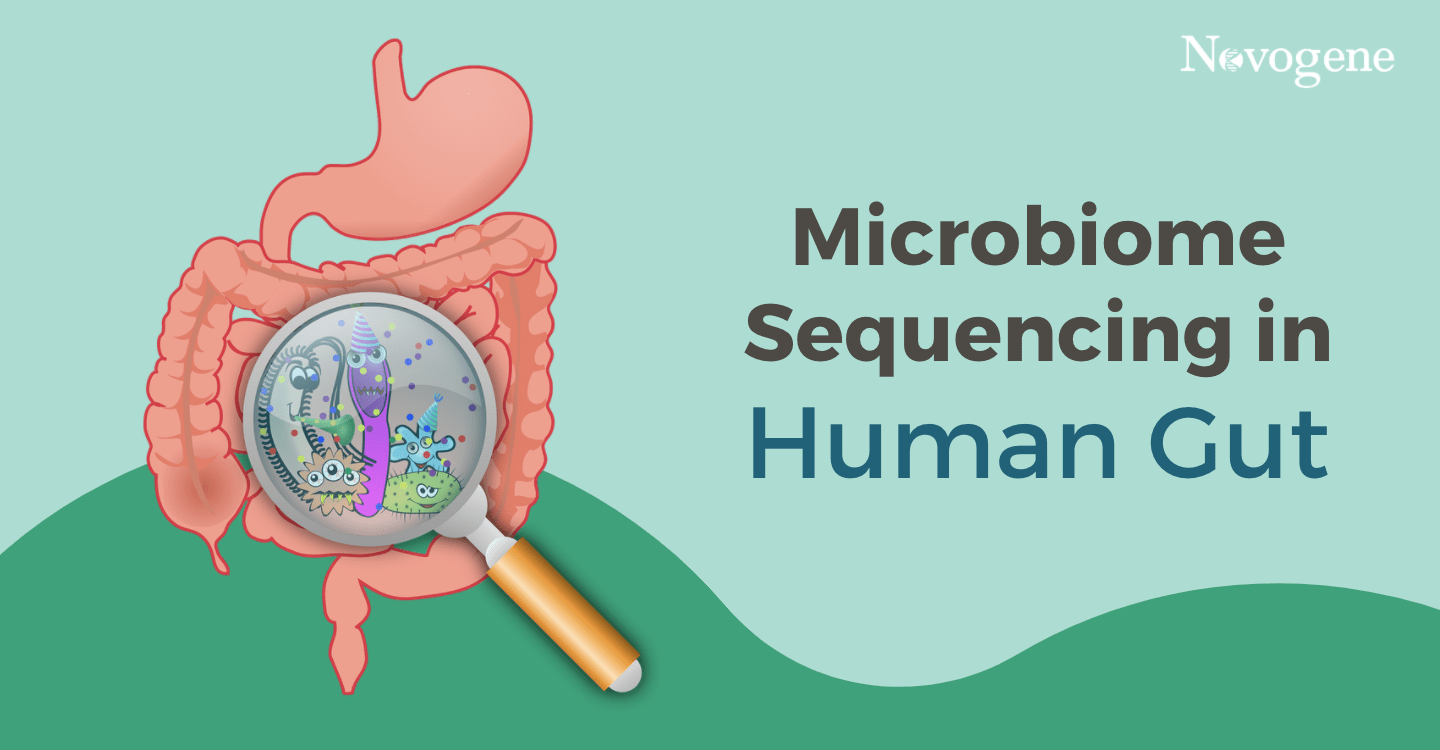
human gut Microbial Whole Genome Sequencing

The microorganisms inhabiting the gut not only interact with each other but are also in constant communion with our own body cells. This has a fundamental effect on our wellbeing. Lack of a well-balanced gut microbiome has been linked to several disease conditions. A plethora of research studies, in recent years, have uncovered a link between the gut microbiome and diseases that are inflammatory, autoimmune and brain-linked, as well as those that disrupt the body’s metabolic processes. These include cancer, multiple sclerosis, autism spectrum disorder, ulcer, depression, inflammatory bowel disease, obesity, asthma and diabetes. In addition to being linked to these diseases, our response to therapeutic drugs is also predicted to be influenced by our gut microbiome.

To better understand how exactly the gut microbiome is linked to our health or disease status, metagenomics technology seems to bring us closer to the answer. These are technologies where you can use metagenomic sequencing to analyze an environmental sample, such as a sample collected from a specific region of the gut. This sample can then either be tested using a targeted approach that comprises of amplicon metagenomic sequencing or it can be tested for all the genetic material present in it using shotgun metagenomic sequencing.

  • 16S Amplicon Metagenomic Sequencing

The most common form of amplicon sequencing is 16S rRNA sequencing. The 16S rRNA is a component of the 30S small subunit of prokaryotic ribosome. Several attributes of the 16S rRNA have made its gene which is common to all bacteria and archaea, an ideal taxonomic genomic marker. The most important reason is that the 16S rRNA consists of both conserved and variable regions in its structure.

https://amea-dev.novogene.com/services/research-services/metagenomics/16s-18s-its-amplicon-metagenomic-sequencing/

The conserved regions make it easier to amplify this gene using PCR, whereas the variable regions are used for the identification, classification and quantitation of microbes that are present in the sample. In combination with next-generation sequencing, 16S rRNA sequencing service provides a unique insight into the inhabitants of our microbiome.

  • Shotgun Metagenomic Sequencing

Shotgun metagenomic sequencing, on the other hand, is a type of microbiome testing that captures the complete repertoire of all the living organisms present in our sample. This understanding of our gut microbiome has largely been made possible in the last few years through advancements in sequencing technology.

https://amea-dev.novogene.com/services/research-services/metagenomics/shotgun-metagenomic-sequencing/

Before the advent of high-throughput sequencing, researchers were unable to study the microorganisms that could not be cultured outside their host. This resulted in huge gaps in our understanding of the underlying disease networks between the microbiome and our own genome. Moreover, several low abundant species from our gut microbiome can now be identified for the first time. This has allowed researchers to investigate in better detail, the microbial diversity that resides in each of us and how they influence our health. It is only after the identification of the individual species in our gut microbiota that it would be possible to explore their functional characteristics.

Novogene Capability of Metagenomic Sequencing

Research into this has further benefited from the leading global provider of high-throughput sequencing, Novogene, which supplies unsurpassed data quality and reliability, by leveraging the latest next-generation sequencing (NGS) technology, bioinformatics expertise and the largest sequencing capacity in the world. By combining metagenomics technology that uses NGS with the latest advancements in bioinformatics for data analysis, researchers can now better capture metagenomes without the painstaking steps of isolation and cultivation of each individual species in the lab.

Outlooks for Metagenomic Sequencing Technologies

As new microbial species are being identified through metagenomics, we are coming closer to having a better understanding of our fundamental bodily processes. For instance, for a long time, it was thought that the relationship between the residing gut microbes and the human body is purely commensal which refers to a non-harmful existence between two species. However, recently, many gut microorganisms have identified that exhibit a mutualistic relationship by helping us synthesize key compounds such as Vitamin B and Vitamin K.

Microbiome sequencing has enabled a multifaceted exploration into the human gut health at several levels. For synthetic ecologists, it has enabled them to understand the assembled communities of interacting microbes that create the gut ecosystem. For synthetic biologists, identification of novel species has allowed them to engineer and ultimately introduce these as a therapeutic tool. Finally, we have come to a step closer to understanding individual variations in the gut microbiome and to answering the question, “what is the difference between a healthy and unhealthy gut microbiome ?”. The implications of these technological leaps and scientific understanding into our gut microbiome go beyond into devising personalized interventions for treating and even preventing debilitating diseases. This is reflected in the recent emergence of therapeutic approaches that aim to manipulate the gut microbiome by either removing harmful species or reinstating missing microbes and the functions they perform. This foray into translational research enabled through metagenomics has great potential for the microbiome to be used as a therapeutic tool.

서비스서비스 menu

고객지원고객지원 menu

기업정보기업정보 menu

서비스
WGSDe novo SeqAmplicon SeqShotgun MetagenomeDM-SeqmRNA-SeqSingle Cell Gene ExpressionVisium HDXenium In SituOlinkUntargeted Metabolomics
고객지원
노보매직CSSFalcon 플랫폼
기업정보
회사소개글로벌 입지플랫폼뉴스룸채용 정보문의하기
LinkedInLinkedIn hoverYouTubeYouTube hoverXX hoverMetaMeta hoverInstagramInstagram hover
Copyright © 2026 Novogene Co., Ltd. All Rights Reserved. 노보진의 한국 내 모든 서비스는 연구 목적 (Research Use Only, RUO) 으로만 제공됩니다. 사업자등록번호: 494-86-03792 | 판매자번호: 노보진코리아유한회사 | 대표자명: 리휘시앙 | 사업자주소: 서울시 강서구 마곡동 779-1번지 뉴브클라우드힐스 BT-230, 231호, 07790 | 전화번호: 02-2038-8036
Novogene Korea
  • Novogene Korea
  • Genomics
    • Human Whole Genome Sequencing
    • Plant & Animal Whole Genome Sequencing
    • Microbial Whole Genome Sequencing
    • Whole Exome Sequencing
    • Plant & Animal De novo Sequencing
    • Microbial De novo Sequencing
    • Amplicon Sequencing
    • Shotgun Metagenomics Sequencing
    Transcriptomics
    • mRNA Sequencing
    • Total RNA Sequencing
    • Full-Length Transcriptome Sequencing
    • Whole Transcriptome Sequencing
    • Small RNA Sequencing
    • Circular RNA Sequencing
    • Metatranscriptome Sequencing
    • Prokaryotic RNA Sequencing
    Single Cell & Spatial Omics
    • Single Cell Gene Expression
    • Single Cell Immune Profiling Sequencing
    • Single Cell Long Read Transcriptome
    • Visium HD Spatial Gene Expression
    • Stereo-Seq Spatial Gene Expression
    • Xenium In Situ Spatial Transcriptome
    Epigenomics
    • Whole Genome Bisulfite Sequencing (WGBS)
    • Directed DNA Methylation Sequencing (DM-Seq) NEW
    • Reduced Representation Bisulfite Sequencing (RRBS)
    • Chromatin Immunoprecipitation Sequencing (ChIP-seq)
    • RNA Immunoprecipitation Sequencing (RIP-seq)
    • Assay for Transposase-Accessible Chromatin with Sequencing (ATAC-seq)

    Premade Library

    • Sequencing Only (Illumina 플랫폼)
    • Sequencing Only (PacBio 플랫폼)
    Proteomics & Metabolomics
    • Olink Proteomics
    • Quantitative Proteomics (MS)
    • Untargeted Metabolomics (MS)
  • 프로모션프로모션
    • 플랫폼
    • 자동화 운송 플랫폼 (Falcon)
    • BI 분석툴 (NovoMagic)
    • Customer Service System (CSS)
    • 브로셔
    • 케이스 스터디
    • 웨비나
    • 블로그
    • 샘플준비 가이드라인
    • 커뮤니티
    • 암 연구
    • 면역 종양학
    • 농업
    • 환경
    • 식품
    • 인간 마이크로바이옴
    • 동물 & 식물 마이크로바이옴
    • 신약개발
    • 희귀 질환 연구
    • 회사소개
    • 글로벌 입지
    • 뉴스룸
    • 채용 정보
  • 문의하기문의하기
  1. Home
  2. Resources
  3. Blog
  4. Microbiome Sequencing in Human Gut Health

Microbiome Sequencing in Human Gut Health

What are Gut Microbes?

Living inside each of our body are trillions of cells that are not our own. These are microorganisms as diverse as bacteria, viruses, fungi, protists, and archaea collectively referred to as the microbiome. Within our body, there are several sites that host these microorganisms such as our skin, gut, mouth, nose, and lungs. Amongst these, those living in the gastrointestinal tract or the gut are the most abundant and diverse. This is the gut microbiome which is established in the first few years after birth as the body is exposed to a wide array of microorganisms in its environment. Which of these are ultimately successful in colonizing the gut depends on how the body tolerates its growth in its budding years. Research has shown that the gut microbiome is unique for every person and changes little throughout a lifetime, although there can be alterations to it through diet or when a person goes from a healthy to a disease state.

human gut Microbial Whole Genome Sequencing

The microorganisms inhabiting the gut not only interact with each other but are also in constant communion with our own body cells. This has a fundamental effect on our wellbeing. Lack of a well-balanced gut microbiome has been linked to several disease conditions. A plethora of research studies, in recent years, have uncovered a link between the gut microbiome and diseases that are inflammatory, autoimmune and brain-linked, as well as those that disrupt the body’s metabolic processes. These include cancer, multiple sclerosis, autism spectrum disorder, ulcer, depression, inflammatory bowel disease, obesity, asthma and diabetes. In addition to being linked to these diseases, our response to therapeutic drugs is also predicted to be influenced by our gut microbiome.

To better understand how exactly the gut microbiome is linked to our health or disease status, metagenomics technology seems to bring us closer to the answer. These are technologies where you can use metagenomic sequencing to analyze an environmental sample, such as a sample collected from a specific region of the gut. This sample can then either be tested using a targeted approach that comprises of amplicon metagenomic sequencing or it can be tested for all the genetic material present in it using shotgun metagenomic sequencing.

  • 16S Amplicon Metagenomic Sequencing

The most common form of amplicon sequencing is 16S rRNA sequencing. The 16S rRNA is a component of the 30S small subunit of prokaryotic ribosome. Several attributes of the 16S rRNA have made its gene which is common to all bacteria and archaea, an ideal taxonomic genomic marker. The most important reason is that the 16S rRNA consists of both conserved and variable regions in its structure.

https://amea-dev.novogene.com/services/research-services/metagenomics/16s-18s-its-amplicon-metagenomic-sequencing/

The conserved regions make it easier to amplify this gene using PCR, whereas the variable regions are used for the identification, classification and quantitation of microbes that are present in the sample. In combination with next-generation sequencing, 16S rRNA sequencing service provides a unique insight into the inhabitants of our microbiome.

  • Shotgun Metagenomic Sequencing

Shotgun metagenomic sequencing, on the other hand, is a type of microbiome testing that captures the complete repertoire of all the living organisms present in our sample. This understanding of our gut microbiome has largely been made possible in the last few years through advancements in sequencing technology.

https://amea-dev.novogene.com/services/research-services/metagenomics/shotgun-metagenomic-sequencing/

Before the advent of high-throughput sequencing, researchers were unable to study the microorganisms that could not be cultured outside their host. This resulted in huge gaps in our understanding of the underlying disease networks between the microbiome and our own genome. Moreover, several low abundant species from our gut microbiome can now be identified for the first time. This has allowed researchers to investigate in better detail, the microbial diversity that resides in each of us and how they influence our health. It is only after the identification of the individual species in our gut microbiota that it would be possible to explore their functional characteristics.

Novogene Capability of Metagenomic Sequencing

Research into this has further benefited from the leading global provider of high-throughput sequencing, Novogene, which supplies unsurpassed data quality and reliability, by leveraging the latest next-generation sequencing (NGS) technology, bioinformatics expertise and the largest sequencing capacity in the world. By combining metagenomics technology that uses NGS with the latest advancements in bioinformatics for data analysis, researchers can now better capture metagenomes without the painstaking steps of isolation and cultivation of each individual species in the lab.

Outlooks for Metagenomic Sequencing Technologies

As new microbial species are being identified through metagenomics, we are coming closer to having a better understanding of our fundamental bodily processes. For instance, for a long time, it was thought that the relationship between the residing gut microbes and the human body is purely commensal which refers to a non-harmful existence between two species. However, recently, many gut microorganisms have identified that exhibit a mutualistic relationship by helping us synthesize key compounds such as Vitamin B and Vitamin K.

Microbiome sequencing has enabled a multifaceted exploration into the human gut health at several levels. For synthetic ecologists, it has enabled them to understand the assembled communities of interacting microbes that create the gut ecosystem. For synthetic biologists, identification of novel species has allowed them to engineer and ultimately introduce these as a therapeutic tool. Finally, we have come to a step closer to understanding individual variations in the gut microbiome and to answering the question, “what is the difference between a healthy and unhealthy gut microbiome ?”. The implications of these technological leaps and scientific understanding into our gut microbiome go beyond into devising personalized interventions for treating and even preventing debilitating diseases. This is reflected in the recent emergence of therapeutic approaches that aim to manipulate the gut microbiome by either removing harmful species or reinstating missing microbes and the functions they perform. This foray into translational research enabled through metagenomics has great potential for the microbiome to be used as a therapeutic tool.

서비스서비스 menu

고객지원고객지원 menu

기업정보기업정보 menu

서비스
WGSDe novo SeqAmplicon SeqShotgun MetagenomeDM-SeqmRNA-SeqSingle Cell Gene ExpressionVisium HDXenium In SituOlinkUntargeted Metabolomics
고객지원
노보매직CSSFalcon 플랫폼
기업정보
회사소개글로벌 입지플랫폼뉴스룸채용 정보문의하기
LinkedInLinkedIn hoverYouTubeYouTube hoverXX hoverMetaMeta hoverInstagramInstagram hover
Copyright © 2026 Novogene Co., Ltd. All Rights Reserved. 노보진의 한국 내 모든 서비스는 연구 목적 (Research Use Only, RUO) 으로만 제공됩니다. 사업자등록번호: 494-86-03792 | 판매자번호: 노보진코리아유한회사 | 대표자명: 리휘시앙 | 사업자주소: 서울시 강서구 마곡동 779-1번지 뉴브클라우드힐스 BT-230, 231호, 07790 | 전화번호: 02-2038-8036
Privacy PolicyCookie Policy