
Novogene Korea
  • Novogene Korea
  • Genomics
    • Human Whole Genome Sequencing
    • Plant & Animal Whole Genome Sequencing
    • Microbial Whole Genome Sequencing
    • Whole Exome Sequencing
    • Plant & Animal De novo Sequencing
    • Microbial De novo Sequencing
    • Amplicon Sequencing
    • Shotgun Metagenomics Sequencing
    Transcriptomics
    • mRNA Sequencing
    • Total RNA Sequencing
    • Full-Length Transcriptome Sequencing
    • Whole Transcriptome Sequencing
    • Small RNA Sequencing
    • Circular RNA Sequencing
    • Metatranscriptome Sequencing
    • Prokaryotic RNA Sequencing
    Single Cell & Spatial Omics
    • Single Cell Gene Expression
    • Single Cell Immune Profiling Sequencing
    • Single Cell Long Read Transcriptome
    • Visium HD Spatial Gene Expression
    • Stereo-Seq Spatial Gene Expression
    • Xenium In Situ Spatial Transcriptome
    Epigenomics
    • Whole Genome Bisulfite Sequencing (WGBS)
    • Directed DNA Methylation Sequencing (DM-Seq) NEW
    • Reduced Representation Bisulfite Sequencing (RRBS)
    • Chromatin Immunoprecipitation Sequencing (ChIP-seq)
    • RNA Immunoprecipitation Sequencing (RIP-seq)
    • Assay for Transposase-Accessible Chromatin with Sequencing (ATAC-seq)

    Premade Library

    • Sequencing Only (Illumina 플랫폼)
    • Sequencing Only (PacBio 플랫폼)
    Proteomics & Metabolomics
    • Olink Proteomics
    • Quantitative Proteomics (MS)
    • Untargeted Metabolomics (MS)
  • 프로모션프로모션
    • 플랫폼
    • 자동화 운송 플랫폼 (Falcon)
    • BI 분석툴 (NovoMagic)
    • Customer Service System (CSS)
    • 브로셔
    • 케이스 스터디
    • 웨비나
    • 블로그
    • 샘플준비 가이드라인
    • 커뮤니티
    • 암 연구
    • 면역 종양학
    • 농업
    • 환경
    • 식품
    • 인간 마이크로바이옴
    • 동물 & 식물 마이크로바이옴
    • 신약개발
    • 희귀 질환 연구
    • 회사소개
    • 글로벌 입지
    • 뉴스룸
    • 채용 정보
  • 문의하기문의하기
  1. Home
  2. Resources
  3. Blog
  4. Darwin Tree of Life Project

Darwin Tree of Life Project

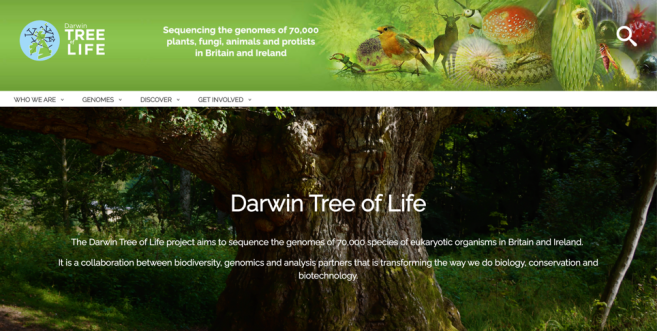
The Wellcome Sanger Institute has recently announced the gargantuan plan of sequencing the genomes of all species that inhabit Britain and Ireland, an estimated 70,000, as part of the Darwin Tree of Life Project. The sequencing of the first human genome took a decade, but the current plan is hardly comparable, with the view of sequencing 70,000 genomes in the same timeframe, with some of the genomes in question up to 30 times larger than the human genome. The first animal genome ever sequenced was that of Caenorhabditis elegans, a nematode worm that has since become a crucial model organism within genetic research. That achievement led to the development of the technology necessary for the Human Genome Project and now, almost a decade later, it is time to turn efforts to the vast array of species within the British Isles, in the name of conservation, food security, resource sustainability, and the environment.
The untapped potential of our ecosystem may hold solutions to the current climate and biodiversity crises we are facing. What species are vital to the survival of the ecosystem, what are they vulnerable to, can this information be used to build a friendlier environment for them and allow them to flourish? Learning how species within an ecosystem interact with each other, from soil to sea to swamp, and how we as humans interact with them, could lead to the conservation of whole ecosystems, not just the species within them. The importance of this is difficult to exaggerate. Of course, humans are selfish, and it is sometimes difficult to understand this importance without being aware of the direct impacts and benefits an effort like this might have for us. The way we are living on this planet is unsustainable and unless we figure out a way to exploit resources responsibly, we are heading for trouble. Plastic is one of the mostly widely used materials across the globe. It is important for many industries – medical, agricultural, pharmaceutical – but its recalcitrant nature and inability to biodegrade means the amount of plastic waste in the environment has reached untenable levels. We desperately need to find more environmentally friendly alternatives. We know of a number of bacterial species, such as Ralstonia eutropha and Pseudomonas putida that can produce the biodegradable polymer polyhydroxyalkanoate (PHA), but what could be unearthed by the sequencing of more microbes? New naturally occurring biopolymers, and even species that can degrade plastics, are all possibilities.

Microbes can not only produce valuable products, but they can also utilise waste. Already well-known species exist that can directly metabolise methane and CO2, two gases that are major contributors to greenhouse gas emissions. The sequestration of such gases and the use of microbial cell factories for the production of value-added products from them is a major industry. But how many unknown species are out there that might be able to do it better? Environmental outcomes are not the only benefit of microbial cell factories, they can produce antimicrobial peptides, anti-cancer drugs, food supplements. That is with the current repertoire of known and fully sequenced species, never mind the potential of the unknown. But to utilise the environment and the species we inhabit this earth with, in a sustainable manner, we must employ tools of the circular economy – replenish what we take. In order to understand what can be done and what is needed in return, understanding the genetic makeup – strengths and vulnerabilities – of as many species as possible will be crucial.

The sequencing strategy of this project will contain two steps – long-read sequencing carried out on PacBio and Oxford Nanopore sequencers and Hi-C, or chromatin conformation capture, which will assist in the linking of distant parts of the genomes to each other. The project is a huge collaborative effort, with a different expert team in place for each step of the process, from sample collection, DNA extraction, sequencing and bioinformatic analysis. There is a huge amount of the biological world yet to be discovered, and genomics and next-generation sequencing are proving themselves once more as being the keys to understanding it. Novogene wishes everyone involved in the project every bit of luck, and we are excited to see what will unfold.

서비스서비스 menu

고객지원고객지원 menu

기업정보기업정보 menu

서비스
WGSDe novo SeqAmplicon SeqShotgun MetagenomeDM-SeqmRNA-SeqSingle Cell Gene ExpressionVisium HDXenium In SituOlinkUntargeted Metabolomics
고객지원
노보매직CSSFalcon 플랫폼
기업정보
회사소개글로벌 입지플랫폼뉴스룸채용 정보문의하기
LinkedInLinkedIn hoverYouTubeYouTube hoverXX hoverMetaMeta hoverInstagramInstagram hover
Copyright © 2026 Novogene Co., Ltd. All Rights Reserved. 노보진의 한국 내 모든 서비스는 연구 목적 (Research Use Only, RUO) 으로만 제공됩니다. 사업자등록번호: 494-86-03792 | 판매자번호: 노보진코리아유한회사 | 대표자명: 리휘시앙 | 사업자주소: 서울시 강서구 마곡동 779-1번지 뉴브클라우드힐스 BT-230, 231호, 07790 | 전화번호: 02-2038-8036
Novogene Korea
  • Novogene Korea
  • Genomics
    • Human Whole Genome Sequencing
    • Plant & Animal Whole Genome Sequencing
    • Microbial Whole Genome Sequencing
    • Whole Exome Sequencing
    • Plant & Animal De novo Sequencing
    • Microbial De novo Sequencing
    • Amplicon Sequencing
    • Shotgun Metagenomics Sequencing
    Transcriptomics
    • mRNA Sequencing
    • Total RNA Sequencing
    • Full-Length Transcriptome Sequencing
    • Whole Transcriptome Sequencing
    • Small RNA Sequencing
    • Circular RNA Sequencing
    • Metatranscriptome Sequencing
    • Prokaryotic RNA Sequencing
    Single Cell & Spatial Omics
    • Single Cell Gene Expression
    • Single Cell Immune Profiling Sequencing
    • Single Cell Long Read Transcriptome
    • Visium HD Spatial Gene Expression
    • Stereo-Seq Spatial Gene Expression
    • Xenium In Situ Spatial Transcriptome
    Epigenomics
    • Whole Genome Bisulfite Sequencing (WGBS)
    • Directed DNA Methylation Sequencing (DM-Seq) NEW
    • Reduced Representation Bisulfite Sequencing (RRBS)
    • Chromatin Immunoprecipitation Sequencing (ChIP-seq)
    • RNA Immunoprecipitation Sequencing (RIP-seq)
    • Assay for Transposase-Accessible Chromatin with Sequencing (ATAC-seq)

    Premade Library

    • Sequencing Only (Illumina 플랫폼)
    • Sequencing Only (PacBio 플랫폼)
    Proteomics & Metabolomics
    • Olink Proteomics
    • Quantitative Proteomics (MS)
    • Untargeted Metabolomics (MS)
  • 프로모션프로모션
    • 플랫폼
    • 자동화 운송 플랫폼 (Falcon)
    • BI 분석툴 (NovoMagic)
    • Customer Service System (CSS)
    • 브로셔
    • 케이스 스터디
    • 웨비나
    • 블로그
    • 샘플준비 가이드라인
    • 커뮤니티
    • 암 연구
    • 면역 종양학
    • 농업
    • 환경
    • 식품
    • 인간 마이크로바이옴
    • 동물 & 식물 마이크로바이옴
    • 신약개발
    • 희귀 질환 연구
    • 회사소개
    • 글로벌 입지
    • 뉴스룸
    • 채용 정보
  • 문의하기문의하기
  1. Home
  2. Resources
  3. Blog
  4. Darwin Tree of Life Project

Darwin Tree of Life Project

The Wellcome Sanger Institute has recently announced the gargantuan plan of sequencing the genomes of all species that inhabit Britain and Ireland, an estimated 70,000, as part of the Darwin Tree of Life Project. The sequencing of the first human genome took a decade, but the current plan is hardly comparable, with the view of sequencing 70,000 genomes in the same timeframe, with some of the genomes in question up to 30 times larger than the human genome. The first animal genome ever sequenced was that of Caenorhabditis elegans, a nematode worm that has since become a crucial model organism within genetic research. That achievement led to the development of the technology necessary for the Human Genome Project and now, almost a decade later, it is time to turn efforts to the vast array of species within the British Isles, in the name of conservation, food security, resource sustainability, and the environment.

The untapped potential of our ecosystem may hold solutions to the current climate and biodiversity crises we are facing. What species are vital to the survival of the ecosystem, what are they vulnerable to, can this information be used to build a friendlier environment for them and allow them to flourish? Learning how species within an ecosystem interact with each other, from soil to sea to swamp, and how we as humans interact with them, could lead to the conservation of whole ecosystems, not just the species within them. The importance of this is difficult to exaggerate. Of course, humans are selfish, and it is sometimes difficult to understand this importance without being aware of the direct impacts and benefits an effort like this might have for us. The way we are living on this planet is unsustainable and unless we figure out a way to exploit resources responsibly, we are heading for trouble. Plastic is one of the mostly widely used materials across the globe. It is important for many industries – medical, agricultural, pharmaceutical – but its recalcitrant nature and inability to biodegrade means the amount of plastic waste in the environment has reached untenable levels. We desperately need to find more environmentally friendly alternatives. We know of a number of bacterial species, such as Ralstonia eutropha and Pseudomonas putida that can produce the biodegradable polymer polyhydroxyalkanoate (PHA), but what could be unearthed by the sequencing of more microbes? New naturally occurring biopolymers, and even species that can degrade plastics, are all possibilities.

Microbes can not only produce valuable products, but they can also utilise waste. Already well-known species exist that can directly metabolise methane and CO2, two gases that are major contributors to greenhouse gas emissions. The sequestration of such gases and the use of microbial cell factories for the production of value-added products from them is a major industry. But how many unknown species are out there that might be able to do it better? Environmental outcomes are not the only benefit of microbial cell factories, they can produce antimicrobial peptides, anti-cancer drugs, food supplements. That is with the current repertoire of known and fully sequenced species, never mind the potential of the unknown. But to utilise the environment and the species we inhabit this earth with, in a sustainable manner, we must employ tools of the circular economy – replenish what we take. In order to understand what can be done and what is needed in return, understanding the genetic makeup – strengths and vulnerabilities – of as many species as possible will be crucial.

The sequencing strategy of this project will contain two steps – long-read sequencing carried out on PacBio and Oxford Nanopore sequencers and Hi-C, or chromatin conformation capture, which will assist in the linking of distant parts of the genomes to each other. The project is a huge collaborative effort, with a different expert team in place for each step of the process, from sample collection, DNA extraction, sequencing and bioinformatic analysis. There is a huge amount of the biological world yet to be discovered, and genomics and next-generation sequencing are proving themselves once more as being the keys to understanding it. Novogene wishes everyone involved in the project every bit of luck, and we are excited to see what will unfold.

서비스서비스 menu

고객지원고객지원 menu

기업정보기업정보 menu

서비스
WGSDe novo SeqAmplicon SeqShotgun MetagenomeDM-SeqmRNA-SeqSingle Cell Gene ExpressionVisium HDXenium In SituOlinkUntargeted Metabolomics
고객지원
노보매직CSSFalcon 플랫폼
기업정보
회사소개글로벌 입지플랫폼뉴스룸채용 정보문의하기
LinkedInLinkedIn hoverYouTubeYouTube hoverXX hoverMetaMeta hoverInstagramInstagram hover
Copyright © 2026 Novogene Co., Ltd. All Rights Reserved. 노보진의 한국 내 모든 서비스는 연구 목적 (Research Use Only, RUO) 으로만 제공됩니다. 사업자등록번호: 494-86-03792 | 판매자번호: 노보진코리아유한회사 | 대표자명: 리휘시앙 | 사업자주소: 서울시 강서구 마곡동 779-1번지 뉴브클라우드힐스 BT-230, 231호, 07790 | 전화번호: 02-2038-8036
Privacy PolicyCookie Policy